Showing posts with label sustainability. Show all posts

Friday, July 10, 2026

When is a piece of vinyl not a piece of vinyl?

Awhile back, I offered a post about specialty brush pads. My discussion was limited, partly because I didn’t own many myself and partly because there was a lot of redundancy of design and construction among the pads available.

After I shared a link to the post on the socials, Anthony Stanislavski reached out to let me know about his brush pad, being made by Prologix. It was essentially a piece of thick vinyl with a coating and graphics showing the path each hand should take while playing brush beats, with a thin nonskid surface affixed to the bottom. At the time, it sold for over $50, which I thought was a little ridiculous at the time. I carried on and forgot about it.

Now, Stanislavski has gone independent of Prologix and is selling the same design at his own web site. It’s the very same item sans the Prologix branding, and it sells for $70.

I can’t know what prompts artists to step out from behind their endorsing brand and go it alone — or elsewhere — though this isn’t the first time someone has done so. It won’t be the last, either. Retail is a fickle mistress and market forces currently require companies to scale up in order to remain profitable. If the item doesn’t keep up with the scale, it gets dropped. If a company can’t scale up, it folds (as was the case with One Beat Better, which made one of the smartest brush pad designs ever and sadly couldn’t compete with the mega-companies) or is bought out by a larger company (as Prologix did with the original makers of the Chopping Block practice pad — they leveraged their size and scale to merge with the smaller business and then came up with a redesigned version that frankly isn’t as nice).

Here’s the original “Choppin’ Block” pad.


If you click on the link it will still take you to Synced Up’s web page, but you’ll find that the original design is gone, replaced with the new version being sold in “partnership” with Prologix, which is making the pad.


In fact, within weeks of the change, nearly all references to the original pad were gone from the Internet, no doubt erased by Prologix’s request in order to concentrate attention and clicks on the new version.

The speed of the change resonated with me in a negative way, though I can’t exactly articulate why.

But I digress.


The challenge with this vinyl sheet brush pad is the retail price. It could easily be replicated at home by anyone with access to an old industrial binder cover (made of flexible vinyl and large enough to cut a 13” circle out of), some neoprene and some superglue. Add your own graphics with a ruler and permanent paint pen, clearcoat as needed, let dry and voila! You’ve got the same thing for less than ten bucks.

However, the other reality is that there are fewer and fewer Americans who know how to work with their hands in even the most elemental ways. 

Before computers became ubiquitous, generations of ordinary people knew how to do simple repairs around the house, like taping and repainting a room, hanging Sheetrock, repairing a broken table leg with glue and a wooden dowel, and even making their own practice pads. I have a number of user-made pads in my collection, some dating from as late is the 1960s and the oldest dating from the 1930s. The earliest known commercially sold pad dates from the early 1910s and can be found in the 1912 Ludwig & Ludwig catalog. It consists of a circle of solid maple covered with a calfskin head and stuffed with wool until firm. It’s meant to provide the same feel as a drum (which in those days also used calf heads and lower tension than we know today) with far less volume.


It could easily be made at home today. And if I can get my hands on a broken calf head I might give it a try. But almost no one else these days is interested in making their own stuff -- either because they can't imagine how, or because they don't want to get their hands dirty.

And that’s why there will be ready buyers for these new brush pads, just as there are ready buyers for any of the cheap, mass-produced practice pads on the market. The combination of consumer trends, educational and workplace demands and the entire generational shift of the last thirty years has resulted in a landscape where people are willing to pay far too much money for mass-produced stuff that involves little or no real craft.

 There are, of course, practice pads on the market that are made one at a time by people who understand the value of craft and how that translates to quality and durability. I've mentioned many of those makers elsewhere in my blog so I don't need to re-list them here.
But if you want those craft makers to continue doing what they do, support them by buying their products and encouraging your friends and students to do the same.  That's the only way those craftspeople can stay in business and not be entirely subsumed by mega-corporations that put quantity and profit above quality.

And if you want to make your own brush pad, there are numerous materials out there that are free for the taking which you can experiment with. Those gigantic industrial binders can be found at many businesses that are going fully electronic, and they'll happily give you one or two before tossing the rest. Neoprene wetsuits make great nonskid material and can be found cheap whenever someone needs to replace theirs due to sizing or age. Yoga ats are also a fine nonskid material and can sometimes be found for free at the curb. Hardware stores sell industrial-strength scissors that will allow you to cut through these materials -- buy two or three sets and keep them handy for all your craft projects. (And remember to work outside when using super-glue or any other industrial adhesive so the off-gases have time to dissipate into the atmosphere!)

The mega-companies will keep making their cheap stuff and using every tool they have to steer drummers -- especially kids -- towards their products. The best thing any of us can do is to show up at the park or band practice with something more sustainably made and chop on it.

Happy drumming!

Thursday, June 18, 2026

DIY Drummer: repairing and restoring a Beetle Last Pad

The Beetle Last Pad originally came as a doublesided pad with two playing surfaces and long tension bolts holding it all together. It was capable of very high tension and meant for modern marching drummers who wanted a pad with a Kevlar head on one side and a Mylar head on the other. 

Later, Beetle released a singlesided version of the Last Pad, meant for lower tension and a Mylar head. It was sold as a pad meant for old-school rudimental drummers, and if you installed a coated head it was also good for brushes. (I have such pad and to my surprise it has become my favorite brush pad, though I also like to chop rope drum style on it. The foam insert makes it feel very buttery.)

The seller bought a singlesided Last Pad and proceeded to assemble it with a Kevlar head and high tension — *not* what it was designed for. I’d guess he did this to save money, since the doublesided version costs far more. (The singlesided Last Pad currently retails for $180; the doublesided version costs $260. Both are worth the price when you take into account the sustainability and the amount of care and craft involved in their construction.

This singlesided Last Pad became available on eBay a couple months ago, and I watched it with interest.

Originally, the seller wanted $180 plus nearly $90 in shipping.

His description: “Beetle pad I bought not too long ago but don’t want anymore. Has some cracks from running but have changed the head with the cracks there, just don’t tune it too high. It has a Remo White Max Head.”

Sadly, in the process he cranked the tension so high — which is necessary for a Kevlar head — that he cracked the baseplate in the process.


I figured that the damage was rough, but repairable. I made a much lower offer, which was rebuffed. So I watched the listing and waited. So did at least fifteen other people.

I watched and waited for over a month, and the price fell over time. Finally, when the price fell to under a hundred bucks and the shipping became, frankly, more realistic, I felt ready to bite the bullet. I bought the pad and planned on repairing the baseplate with wood glue and clamps, and would see how it turned out. (I also planned to swap in an Emperor head and use lower tension.)

The pad arrived about a week later. The seller had simply tossed it in a box without any packing material. The cardboard box was ripped apart and crudely taped up again. The pad had bounced around inside the box and there was far more damage to baseplate than the listing photos had shown.

I gave the seller a mediocre review and told him to do better. Then I turned my attention to the pad.

I took it apart, and discovered that the previous owner had cranked down the tension so much that two of the bolts snapped when I tried to loosen them. Additionally, ten of the twelve washers were malformed from overtensioning. There were only single, large washers, not the second set of smaller washers that my singlesided Last Pad had come with.

I set aside the head, rim and bolts, and got to work on the baseplate.


Detensioning the hardware made the cracks narrower, so I had to slip a flathead screwdriver into the crack and widen it a little. I poured some wood glue into the crack, pressed it in with my finger and poured some more. Finally, I clamped the crack closed.

I repeated this with the crack in the second and third areas of damage, and set the baseplate aside to dry.


Then, I slipped the big washers into my bench vise and straightened them as best I could. That turned out fine and I felt comfortable reusing them at lower tension.


I chatted with Bradley at Beetle, who confirmed that this was probably a very early release of the singlesided Last Pad because it used only large washers. Subsequent versions have included two sets of washers and this works far better in terms of strength and durability.

I went through my parts bin and came up with replacement bolts and a set of smaller washers (old bicycle axle washers, nice and thick!) to add to the assembly.

Then, I waited for the glue to dry. Because I couldn’t be sure how far down into the cracks the glue could seep, I left the baseplate clamped all day. When I removed the clamps in the evening, the repair held solidly. Before stopping for the night, I drilled some vertical holes through the baseplate, two at each repair area, to receive hardwood dowels for greater stability.

The next day I got the fluted hardwood dowels to glue into the six stabilizer holes I’d drilled. The flutes carved into the dowel allow for glue to set in firmly with the wood and create a better bond and seal. When I ran this by Bradley, he suggested that the glue would do the job all by itself and that perhaps the dowels were overkill; but the bicycle mechanic in me really wanted to make sure the repaired baseplate wouldn’t come apart under stress. 

Valchromat (aka ForesCore), the material that is used in the baseplates and inserts of all Beetle pads that aren't built around solid wood, is made from compressed, finely ground wood fiber and a special glue. This is basically like MDF, but Valchromat uses very little formaldehyde and is much safer than ordinary MDF. Also, it's impregnated with color during the compression process so when you chip or scuff it, you don't lose color the way you would with wood that has simply been painted externally. It's also harder than MDF, and therefore a much better material all around. 

That said, if you're going to sand or drill Valchromat, it's still important to do so in a well-ventilated area and wear eye and mouth protection. Safety first!


In this photo, you can see where I’d had to build up the edges of the baseplate that had broken off. For this, I sanded everything, applied scotch tape around the missing part of the edge to form a “wall,” and poured in the glue to set overnight. When I removed the tape in the morning, a tiny bit of wet glue beneath seeped out, causing a slight collapse of the “wall.” Enough of the glue had dried that I didn’t worry about it. I knew that there would be enough of a repaired edge for my purposes, let the remainder of the glue dry and called it good.

The pad came with a 3/16” tire rubber insert, which would normally be too hard for my tastes. Bradley offered to make me a new insert with gum rubber so I could achieve something much closer to the feel of my 15” marching snare drum. While waiting for that, I decided to assemble the pad with the parts I have and see how I like it.

I let the glued dowels dry all day, and shortly before dinner time I assembled the pad with what I had on hand, including the harder insert and an old Emperor head. While I’m glad to experience the 3/16” recycled tire insert under a tuned head, it’s not really my thing and I will replace it with either a thin gum rubber insert or a 1/4” recycled tire insert, either of which will feel a little nicer for my hands. And I have a new Emperor suede head on order at Revival that should be here next week. 


Gosh, what a cool pad. I’m happy to have a second Last Pad for harder Mylar chopping, and thrilled to have repaired this at home.

(I was tempted for about twenty seconds to send the video to the seller, but my schadenfreude doesn’t run quite that deep. Mom raised me better than that.)

If you want a Last Pad, both versions are available on the Beetle Percussion web site, and are worth every penny.

Happy chopping.

Saturday, November 8, 2025

Made in China. But at what cost to US makers?

The annual convention of the Percussive Arts Society is happening this weekend in Indianapolis.

PASIC features lots of workshops, performances and a gigantic marketplace where drum companies display their latest releases of new product.

I've never been and likely won't ever make it to a PAS Convention. But I'm confident in saying that at least half of what's new on the market this fall will have been manufactured in China.

(You can read my previous posts here about which companies are making their own products in-house, and which are having them made and branded by juggernaut factories in China. The last time I went into specifics, guys from the two biggest US drum companies went all pitbull on me in the socials and it wore me out.)

That drum companies feel compelled to mass-produce cheap pads overseas, mark up the retail by several hundred percentage points and then massage the socials to hype their pads so that kids will want to buy them, is just a sad reality of today's practice pad market. It has been a sad reality of retail for a long time, and there is little you or I can do about it except to point out when things go sideways.

Case in point:

A well-known marching drum instructor and clinician had a signature pad that was produced for several years by a US company. That company made the pads in small quantities in-house in the US and they were immensely popular among marching drummers. The pad was very well made and retailed for a little over $100, a price deemed a little high by the dictates of the modern practice pad market, but understandable because the pad was made in small batches by the guy who was selling it and there wouldn't be a ton of profit in that. (Apparently, you're not supposed to turn a huge profit if you make what you sell. Who knew?)
It became one of the most popular pads in that maker's catalog.

This fall, that instructor told his small US maker to drop his signature pad. He was signing on with a larger company as one of their official artists, and the new company would be offering his pad going forward. 

The catch? The company this instructor has jumped to doesn't actually make any of its own products. They are all made by other manufacturers and embossed with the company's name and logo. In the case of practice pads, the pads for the new company are all made by Hanflag in China. Hanflag makes pads and rebrands them for a bunch of American-based companies including RCP, Salyers and others. 

When you have one factory making products for three or five different companies, those companies have to come up with ways to differentiate from each other in order to sell more units. If they can't find a way to differentiate, then negotiations must be made for one company to drop a pad design and allow another company to market that design under their name. 

(This has just happened with Salyers and RCP, both of which produced an adjustable snare pad that was made by Hanflag -- which also sells the pad under the brand name HUN in Asian markets. Salyers realized that it could not differentiate enough from RCP, and since RCP brought out the pad in the US market first, they are keeping it in their lineup while Salyers has discontinued it. I wasn't a fly on the wall, but I have friends who work in the industry and they have confirmed that this is basically what happened. Good luck finding a Salyers "Stealth" pad now. They're gone. But you can get the exact same design from RCP, which sells it as their "Active Snare" pad.)

What's so maddening about this is that the production is not at all sustainable; the pads use materials that are redundant and harmful for the environment and the factory has to ship them halfway around the globe to get them into the hands of kids in the US market. None of this is good. What makes it worse is when a design is copied -- or altered just enough to avoid copyright infringement -- so that an artist can shift his allegiance from a small-batch craft maker to a larger mass-producer which doesn't even make their own product.

This conversation has already made its way to the socials, and the new design of the pad mentioned above has just been released at PASIC, so I'm not revealing anything new here.

Exhibit A: the original design, made in the US from sustainable, environmentally sensitive materials. The practice rim went all the way around and the top surface had a laminate laid over recycled rubber. A second surface affixed to the bottom provided a different feel and made the pad versatile.


Exhibit B: The new version of this design, altered enough to avoid legal concerns and mass-produced in China from materials that are very likely not as environmentally friendly. The practice rim goes only halfway around the surface, and there doesn't seem to be a laminate (though I won't be surprised if one is sold separately at a premium price).

This new version of the design retails for around $100. Consider how little it costs to make this mass-produced version and you realize that a great deal more of the money will be pure profit for someone who didn't make the pad. (By the rules of this game, the man who owns the company is the one who deserves all the profit he can get. Because he was smart enough to get someone else to make the product for him at pennies on the dollar.)

I'm sure the new version of this pad design is playable, and will sell well enough to justify the switch. The kids who participate in the modern marching arts are all familiar with this instructor and will certainly want to buy this new pad.

The instructor/clinician is a brilliant drummer, has chops for days and also publishes instruction books that are becoming very popular among marching drummers. (The new company will distribute his books, which is an added bonus for someone who had been self-distributing before.) I have no ill will for the drummer at all and wish him well.

What bothers me is that the marketplace as it is currently designed and managed forces people to make decisions based on economics first, and other considerations fall much farther down the ladder. This isn't one drummer's fault. It is the fault of a kind of capitalism that insists on endless growth for a company's survival.

The kids who will buy this pad won't care. They're kids who just want to chop on an awesome pad designed by an awesome drummer. Never mind how the pad came to be what it is today, or where and how it was made. If you try to educate the kids about this whole scene, they will resent you for harshing their vibe. That's just the way it is.

But the state of the drum marketplace today is just so predatory and wasteful, and that is why I've largely turned my attention to collecting and restoring vintage pads. Every old pad I bring back to life is a pad that won't go to the landfill, and instead can be handed to a young drummer to be enjoyed for many more years. I can live with that, and I can live with never stepping foot into another trade show exhibit hall for the rest of my life.

Chop on.

(NOTE: If you wanted the earlier version of this pad, don't worry! The original US maker of this pad has turned to making custom pads on demand, and if you can live without the signature you can probably get something very close to the original design of the pad above.)

Sunday, January 12, 2025

Another look at Formaldehyde (found in MDF)

A few months ago, I took a peek under the hood to learn more about MDF, a popular material used in the bases of many mass-produced practice pads.

Last night, the PBS News Hour released a short article about Formaldehyde, a key element of MDF, and why we should all be concerned about Formaldehyde exposure, especially indoors.

I invite you to check it out here, and then consider whether your practice pad purchases (from Vc Firth, Zildjian, Vater, Evans and many other major drum companies) are increasing or reducing the harmful effects of Formaldehyde at home, work and school.

I don't plan to purchase any more pads or other drum equipment that includes MDF.

If you’re concerned, consider helping your students make their own pads from recycled, repurposed materials (like used wood and rubber sheeting) that won't emit off gases. Support companies which use more sustainable materials in their manufacturing processes. Also consider how far your practice pad had to travel to get into your hands, and think about sourcing pads that are made closer to home to reduce your carbon footprint too.

Saturday, November 30, 2024

Crap just keeps getting crappier: The arms race is over and I’m done.

The latest from Xymox, the Voldemort of drum practice pad makers, appeared in my feed today.

That’s right. Oblivious to the patent and trademark infringements going on here, Xymox has decided to screw everyone by selling a knockoff of the old tan RealFeel pads from the 1990s.

Same look, same shape, and a nice knockoff of the old HQ logo that reads “OG”.

They must know they’re in violation of something here.
And my guess is that they don’t care.

As soon as this showed up on the drum pad groups, people howled, either in derision (“I cannot believe that Xymox would stoop this low”) or in excitement (“I have to get one!”)

A guy who works at D’Addario, which owns Evans and all the designs and branding from HQ (which originated the design thirty years ago) is popping a vein. He promises that D’Addario will take legal action, if necessary, to stop this thing in its tracks.

I predict that they’ll be too late, and that almost no one in the general pad market today will actually care all that much. They’ll be too late because the pads are already in production and are being sold at the Xymox web site, and any legal action taken will not stop the pads already shipped out. (Nor will said legal action protect the exclusive on the octagonal shape, because you cannot really patent a geometric shape anymore.) 
And other than a few hundred people who got ripped off by Xymox, almost no one else will care, especially the Gen Z kids who  see this as their chance to get something close enough to the original tan RealFeel pad their dad practiced on thirty years ago.

It gets better. RCP just came out with this delightful little Chinese-made knockoff, which I believe is supposed to hearken back to Offworld’s Shuttle Pad. It’s another crass attempt to play on fake nostalgia, and it’s kind of depressing.

Crying foul now, when nearly every mass-produced pad on the market is made in part or in whole in China, is like bolting the barn door after the horse has fled.

And with that, I know that I have stayed involved for long enough.

There is less and less interest in vintage pads and their history now. The online drum chat groups are populated mostly by folks who are young enough to be my grandchildren, and they want whatever the top 12 DCI drum lines are using. Even if it’s poorly made, even if it’s unsustainable, even if it will wear out in a year or two. They do not care. Fine. Let the modern mass-producers of practice pads chase each other’s tails, and chase the dollars of every high school and college drummer out there. I’ll chop on what I have and be content.

Happy drumming.

(Photo: yours truly, using a fire hydrant as a practice pad.)


Sunday, August 25, 2024

More adventures with Beetle Percussion: rescue pads

I’ve been making it a point lately to search for used Beetle pads and snap them up.

Why?

Beetle Percussion is a guy making practice pads, one at a time, in his garage. 

Each pad is craftmade from the most sustainable materials available, and sourced as close to home as possible. The result is a pad that is solid, sounds and feels great, and is beautiful to look at too.

Beetle Percussion goes into great detail about the dimensions and construction of each pad model, and you can learn more at their web site.

My most recent finds — I call them Rescue pads — are below.

1. Ash Pad. This was advertised by the previous owner as a Grass Pad, which is a different animal altogether. So when it arrived, I was really confused. I confirmed with Bradley Lomax at Beetle that this is, in fact, an Ash Pad. It’s just light enough to take along in a padded bag, and has two sides for playing. The wood is gorgeous. Looking at the edge, it reminds me a little of the poured sand sculptures I made at the shore when I was a kid, in tiny bottles that could be sealed up and taken home. 

Ash is a hardwood, which means that when used as a pad base it will provide a feel that is harder and faster, even though the response is still very pleasant to the hands. Sloppy beats have nowhere to hide on this pad. Also, hardwoods darken as they age, lending a beautiful patina to the base over time.


(The Grass Pad is made from hemp fiber, and the difference in appearance is striking. Check it out on the web site for more details. I may still try to find one of these for my collection later on.)

2. Pine Pad. This model was one of Beetle’s first, and remains a staple in their lineup. Using a much thicker (1.5”) base, it’s also a fairly heavy pad, and for that reason is not ideal for travel. (There was once a single-sided 8” model, which I have, but that size is no longer in production. The 8” version travels well and is fun to play.)

The two different thicknesses of recycled rubber offer different feels, though on a base this thick it might be harder to head a significant difference in tone. I have this one set up in a stand right now and have been getting to know it better.


I’ve already reviewed the Carlos Botello signature pad in a previous post, and continue to be surprised at how much I enjoy this model.

3. Tony Teleky Bus Pad. These were designed in collaboration with Tony Teleky, a drum corps alum and current instructor with Carolina Crown drum corps. He shares my passion for sustainability and is a terrific musician. He designed the Bus Pad precisely for the reason the name implies: chopping on a pad on the tour bus. The pad’s dimensions work beautifully in the confines of a bus seat, and allow for easy transport in a backpack.

(When I marched drum corps in the late 1970s, we traveled on school buses and chopped on a pillow on our lap, or on the tall padded back of the seat in front of us. Heavier, marching-specific practice pads did not yet exist. At home, most of us practiced on Remo tunable pads, or a rubber pad like the Ludwig “keystone” model. Kids with money might find a Trankle Pocket Pad, though they were spendy for the time at over $20 each. Many of us made our own pads from a phone book and duct tape, which was good enough in the days of lower-tension Mylar-headed drums. It was, as we say, a different time.)

There are two generations of this pad in existence: the first was a single-sided pad with a solid wood base and 3/16” recycled rubber surface. It was very popular when it came out. The Bus Pad was later revised and the second generation is now made with a Valchromat base and two playing sides: one is made of naked recycled rubber, and the other is recycled rubber with the same laminate as used on the Botello pad. I obtained mine in a straight across trade for another pad. There are a few very tiny dents in the laminate, but only one is really noticeable, and it’s not enough for me to ask for a replacement laminate.

I have been enjoying this little pad a LOT. The playing surface on both sides is very nearly perfect, and positively dreamy for portable chopping on the bus or at the park. The perfect size for travel — this one fits in my bicycle saddlebag!

I may seek out an older version of this pad for sake of including it in my collection, but it’s not a high priority. If one falls into my lap, great. If not, that’s okay too.


4. In addition to these Beetle pads, I also have an original BAP (short for “Big Ass Pad”), made of solid pine and recycled rubber and measuring two feet in diameter. I bought this on sale when the last of them were being offered on closeout. The plan was to discontinue this version because the size wasn’t popular enough for the costs involved in making and shipping it and still remaining competitive.

I’m ashamed to admit that right now, my BAP functions as a bit of a catch-all table in my studio. I hope to rectify that situation soon. 

For quite awhile, there was no word as to whether the BAP’s demise was permanent, or just a long term hiatus.

That question was answered earlier this year when Beetle announced the release of a new version of the BAP, this time made with a Valchromat base and including a smart carrying handle.

If I were holding a monthly pad party in my community (something I’ve dreamed of doing, tried twice and gave up — maybe I’ll try again this fall), I might find the new version of this pad to be a nice thing to add to my stable. If you work with a drumline or afterschool arts program, you might investigate this pad as a useful resource.

I’ve now given myself some impetus to clean up the space a little and use this baby more.


There are so many — probably too many — mass-produced practice pads on the market today, and in my humble opinion, most are overpriced for how they’re made and what you get. (It’s telling that Remo’s tunable pad, first released in the early 60s and still made today in 6”, 8” and 10” sizes, still finds its way into the hands of schoolchildren across the country and around the world — and at a price far more commensurate with its construction cost and long term value. The 8” size, now considered the standard size for student use, retails for around thirty-five bucks. Compare that to the price of a gray Evans pad, with the same retail price of $35, but which is not as durable as the Remo and cannot be refurbished when it wears out.)

All those mass-produced pads have an environmental cost that isn’t taken seriously enough today.
That’s why I try to stick with pads with a higher sustainability quotient, like tunable pads whose heads can be replaced (pro tip: cut up the old head for those little strips to attach the snares to a drum), or pads made more sustainably (like Beetle and, to a lesser extent, Mad Pads, both of which source their components as close to home and/or recycled as possible and use local labor to make them).  

I encourage you to ask better questions about the drum equipment you buy and use, and seek out products that offer as high a degree of sustainability as possible, including buying local and/or used, trading for other gear, and choosing products that are lower on the environmental supply chain where possible.

I’ll share more sustainable drum goodness as I find it.

Wednesday, August 21, 2024

I take back ALMOST everything I’ve felt or said about laminates: Beetle’s Botello signature Pad

If you’re a regular reader here, you know that I’ve never been a huge fan of laminates on practice pads.

Growing up on Mylar, I just never felt the need for adding something  that resembled Formica to what was already a perfectly decent pad.

So over the years, I’ve tried lots of laminated practice pads, and I have found most of them ranging anywhere from pointless to horrible.

I originally tried this pad three years ago, and because at the time I was doing a lot of drumming on older vintage drums with Mylar heads and standard tuning, I didn’t really appreciate the pad at the time.

More recently, I had an opportunity to buy this pad used and decided the price was worth the risk. Maybe my hands and head were in a different place now.

The Carlos Botello signature pad from Beetle Percussion is designed in partnership with percussion instructor, arranger and performer Carlos Botello, who teaches drumlines across the country including the Crossmen Drum & Bugle Corps. He’s also the creator of the multi-volume instructional series of books, The Left Hand Path (which are available online).

Carlos Botello and Bradley Lomax designed a really nice practice pad. You can click on the link that will take you to the Beetle page for this pad and read about the details that go into making it.

Disclaimer: I bought this pad used in a private party sale. The construction is identical between my used pad and the pad currently sold at Beetle’s web site. My pad is an early iteration of this model and lacks the graphics on the top laminate, but otherwise it’s the same pad.

My pad has been through the wars a bit — dropped, scuffed, played a fair amount (though happily, my laminate has no dents in it) — but works as advertised.

The top of the pad has a 1/4” thick recycled rubber surface, covered by a Mylar laminate. One might think that this is just another hard, unforgiving Formica-like playing surface, but they’d be wrong. 

This side plays like buttah.

It’s soft enough that the laminate offers useful articulation instead of undue resistance. The Valchromat base is more durable than MDF and if you drop it, there’s no surface paint to scrape off because the fibers of the Valchromat are impregnated with the plant-based color all the way through.

The rubber rim is soft, but embedded deeply into the base so it will stay put, and gives just enough presence for you to know if your rim shots are accurate or not.


The bottom surface includes Carlos’ signature and a 1/2” thick layer of dense, soft foam. This side is meant to give you a place to build your wrists and get a good workout. There is almost no rebound at all, which makes it similar in intent to the pillows we used to practice on while on drum corps tour, and when you play on normally-tensioned Mylar heads, such workouts make sense.

If I were still possessed of younger, stronger hands and not bothered by advancing osteoarthritis, I might find this surface useful in my practice. But working on such a surface now would actually be quite painful and potentially harmful for my hands and wrists, so I will likely just avoid this side completely. 

(NOTE: I’ve reached out to Beetle Percussion and asked about the possibility of swapping in a non-laminated recycled rubber surface to replace the foam. If they can cut a Floppy Disc to match the shape on the underside of the Botello pad, swapping the two shouldn’t pose a problem, and I can do the swap myself.)

I think the combination of the recycled tire rubber and a real Mylar laminate (similar to what’s used to make a drum head, though perhaps a little thicker) makes for an ideal practice surface, especially for Rudimental and marching applications. It’s articulate without being harsh in feel or sound, and the surface will indicate your accuracy immediately without hesitation.

Having tried other Beetle pads with a rubber rim, I can say that the rim is a little soft for my liking, and I wonder how long it will remain durable enough to help me gauge my rimshots. Because this pad is so used, I may stiffen the rim a little by adhering a very long zip tie to the outside wall of the rim. I’m waiting to hear back from Bradley at Beetle for his thoughts first.

The pads are currently available at the Beetle web site, but be warned: high-craft pads like this are made one at a time and you could be waiting a month or more for yours to arrive. Also, pad models are made on a rotating cycle (because the cutting machinery must be reset for each pad’s thickness and diameter.

Various models of Beetle pads go in and out of stock depending on the model schedule, so if a model is out of stock, contact Beetle and ask when it might be available again.

Beetle is my absolute favorite American practice pad maker today, because they pay attention to their impact on the environment and do all they can to reduce negative effects by incorporating as many sustainable manufacturing practices as possible. This does make their craft-made pads more expensive than mass-produced rubber-on-wood pads, but in my humble opinion it’s worth the extra cost.

This Carlos Botello model could became my new favorite rubber drum pad for awhile.

Friday, August 16, 2024

Under The Hood: What is MDF, and why should you care?

If you're a regular reader here, you know that I've occasionally referenced MDF as a component of modern practice pad manufacturing.

What IS MDF?

It stands for Medium-Density Fiberboard, which is a material often used as the baseplate material for modern practice pads. It's also used in flooring and furniture manufacturing. Because it's a wood product, rather than real wood, it's more resistant to pests like termites and ants, which is especially important in home construction** and repair.

A good basic examination can be found here: https://en.wikipedia.org/wiki/Medium-density_fibreboard

There have been concerns raised about MDF in multiple industries, including drum pad manufacturing, and with good reason. regular MDF requires chemicals to ensure proper adhesion of its multiple ingredients and one of those is formaldehyde.

What is formaldehyde?

Formaldehyde is commonly used as a preservative in medical laboratories, mortuaries, and consumer products, including some hair smoothing and straightening products. It is also a by-product of automobile combustion and is produced in very small amounts [emphasis mine] by most living organisms, including humans.

Formaldehyde is used in the process of embalming bodies to prepare them for burial.
(Side note: Jewish religious law prohibits embalming, in accordance with the belief that the body should not be preserved when the soul is done using it. So when I die, my body will decay faster. I'm fine with that.)
It is also used to preserve body parts in laboratory jars. (Remember the "Abby Normal" brain scene in Young Frankenstein?)

The fact that it is used in hair products horrifies me. While humans produce tiny amounts of this stuff, what's found in hair products is in a more concentrated form and therefore should be suspect by anyone wishing to avoid consuming quantities of it on purpose. There's currently a huge brouhaha in the Black community among folks who were told for years that hair-straightening products were totally safe, but whom have experienced a noticeable spike in certain kinds of cancers after regular use of such hair products over an extended period. That should tell you something.

But I digress.

MDF is a popular choice for most pad manufacturers because it's cheaper than whole wood, and because it's less prone than whole wood to things like warping and natural flaws in the grain, which have to be removed and/or otherwise worked around at greater cost. MDF is easy to shape uniformly, and it takes paint beautifully.

Depending on the mix of ingredients (which, along with formaldehyde and other chemicals, also includes pulverized wood fibers, wood resins, and wax), it can be made in different densities and degrees of flexibility; however, most MDF is made to approximate the rigidity of natural wood.

But MDF has a much higher concentration of formaldehyde than the average human body, and releases that formaldehyde in the form of off-gases that can last indefinitely. Surface paint will seal off some of the formaldehyde for awhile, but eventually it does seep through. I can only imagine what it would be like to work in a warehouse where thousands of pads are stored, awaiting shipment. I don't think anyone has measured the seepage rate of offgases in a meaningful, verifiable way yet. But when they do, I'll certainly pay attention.

So many modern practice pads are made with MDF baseplates that it would be easier to note which ones aren't. And while it's easy to differentiate among brands of modern pads, it's worth noting that there are likely only a few overseas factories actually manufacturing all those pads.

Branding is not the same as manufacturing.
Want proof? Xymox made re-branded pads for  other drum companies for years. Offworld has done so in more limited quantities (Remember the yellow Lone Star pads? Apparently, those are a hot collectible right now.) The Chinese juggernaut HUN has been making pads right and left for Salyers, RCP and many other drum companies.

I've owned and used some of these pads myself over the years. But once I began reading up on MDF and what it actually is, my ownership and usage of these pads fell off considerably. Most of my "modern" pads are older and in used condition, so the worst of the off-gases has likely gassed out. But still.

Another issue with pads using MDF basesplates is durability. The less dense the baseplate is, the more prone to damage it is in a fall or other sudden impact. RealFeel pads have shown evidence of such wear and tear over the years; take a good look at the corners of any RF pad that's twenty years old and has been through the wars. So have older Xymox pads, from their rubber-on-wood days. Interestingly, the baseplate on a recently acquired NOS (ca. 2000?) Xymox shows evidence of a woodgrain on both sides of the pad. This could likely be a veneer laid over the MDF, or it could be really sloppy brushstrokes. I'm opting for the former until I can find out more. In any event, the baseplate on my NOS Xymox feels heaver and more dense than the one on my pre-2023 VF Stockpad.
As with all things, Your Mileage May Vary.

Here are photos of brand new Heavy Hitter pads from Vic Firth, released this summer. Both of these photos are from drummers who opened the box after receiving it in the mail, only to find that the MDF baseplate was split right through the middle, likely the result of being knocked around during shipping. (And we all know how brutal UPS can be.)


Hopefully, these buyers can get free replacement pads and therefore a good outcome.
The fact that this pad retails for a hundred dollars gives me pause. The fact that the baseplate can be damaged so easily because the material is less dense than actual wood convinces me that I should probably save my money.

Alternatives to MDF

There are a few alternatives to MDF, though they are not cheap.

1. Real wood. Beetle Percussion offers craft-made practice pads using whole wood (pine or ash) salvaged from trees killed by invasive beetles (hence the company name). The playing surface of Beetle pads comes from recycled tires. I own a couple of Beetle pads made this way and I like them. The real wood does offer a different feel that some may not like, especially if they're used to MDF pads. There is a little less shock absorption with real wood, and more of the vibration of each hit will be felt in your hands. For some, that's uncomfortable. For others it's useful information about the clarity and timing of each drumstroke. This issue seems to be somewhat mitigated by using a thicker slab of wood for the baseplate. You'll have to decide for yourself.

Beetle has also experimented with Hemp wood, which has a texture and feel closer to grass. When compressed and turned into board with a plant-based adhesive (as opposed to the chemicals found in MDF), it can be rather heavy, but durable. Best used in smaller diameter pads.

2. Premium MDF -- I just learned about this option from Michael at Mad Pads (stay tuned for an interview coming later at this blog!). It's apparently somewhere in between regular MDF and actual wood in terms of both price and environmental health, using far fewer chemicals and still having the ability to be cut, shaped and painted easily. I am still researching this option and will report back.

3. Valchromat -- this is a material constructed similarly to MDF, using compressed and glued fibers. It was developed in Europe as a stronger and more environmentally sensitive alternative to MDF:

Valchromat is an environmental friendly non-toxic substance made from recycled pine wood and mill waste. Valchromat panels are manufactured using waste wood such as branches and chips from softwood forests. In using waste wood Valchromat helps to sustain forests and minimize carbon emissions given off from felling machinery. Also the carcinogenic odorless chemical gas known as formaldehyde which is found in the wood fibre bonding resin used in standard MDF is absent in Valchromat where a special organic non- toxic wood fibre bonding resin is used allowing Valchomat is safe to be used in the manufacture of kids toys. Valchromat also use the same colour dye used in fabric. This dye is organic and non-toxic.

(from the Valchro web site)

Beetle Percussion uses Valchromat as the baseplate material in some of its pads. The vegetable-based color is impregnated into the material, eliminating the need for paint; and the lack of formaldehyde is a fantastic development.

The downside of Valchromat is that it's very expensive. Hopefully, as more industrial uses are found for this material and its use becomes more widespread, costs will eventually go down.

Is ANY amount of formaldehyde in MDF okay?

Good question. For a possible answer, I found this:
https://www.realtor.com/advice/home-improvement/what-is-mdf-furniture/

Read it, think about it, and do your own research.

In an age of faster access to information, it's easier than ever to learn about the details that go into the drums and accessories we use. If you're curious and want to go deeper, I invite you to see what you can find.

Happy drumming.

(** I live in a very little house that was built in 1906 and last remodeled in 1948. So the incidence of construction-based MDF in my house is pretty low. Just sayin'.)

Tuesday, March 1, 2022

Product Review: Revolution "Chopping Block" practice pad UPDATED

I've enjoyed exploring the new and growing world of so-called "workout" pads, as covered in my previous post.
I've learned a few things:

-- First, don't play your "workout" pad a ton. Just a few minutes each morning and evening is plenty, especially if you're a beginning to intermediate drummer. If you play it a lot, you will get really sore hands, fingers and wrists, and you may hurt something that will force you to stop drumming for a little while. Which would be a massive bummer.

-- If you buy a pad you're only going to warm up on twice a day, there is -- or should be -- a pricepoint beyond which nothing makes logical sense. More on that later.

After trying several different makes and models of "workout" pads, I was ready to follow my curiosity and bite the bullet on a Revolution "Chopping Block" pad.
They're hard to miss if you spend any time online. Their ads pop up all over the place and they're endorsed by at least a few famous drummers [below a certain age -- heh heh].
Plus, they're very attractive in appearance.

So I managed to buy a "B-stock" ("blemished") pad at half the price of a new one. Even that was steep at $70.00, but in the interest of science or research or some such whatever, I went for it.

Below is my video assessment of the Revolution "Chopping Block" pad.
Additional comments and opinions follow the video.

As I shared in the video, I did manage to ask a few questions via FB messenger and the answers were slightly less than complete. Since then, Revolution has not returned any emails or further messenger questions.  I can't say I'm surprised; I did ask some questions that many manufactureres might find pesky or, at worst, downright damning (depending on context, and context is an awful lot in this business).

So after waiting a few days for further responses and receiving none, I've decided to follow up here:

-- Revolution has designed a very nice and attractive pad that performs as advertised.
I'm putting that up front so folks know that I do NOT have a beef with the quality and performance of the product.

-- The pad is advertised as coming in small batches from a family business in the USA. And they DO make the distinction that the pads are assembled where the company is based (Bend, Oregon). However, when I asked where the various component parts -- the teak base, the silicon and closed-foam playing surfaces -- come from, I was told "Michigan and some other places."
And that is all the info I've gotten to date. I've asked for more detail and have gotten none.

Since then I've done a little more digging. The silicon and closed-foam parts can be made anywhere, and are.
Teak, on the other hand, has some issues:

Teak (Tectona grandis) is a tropical hardwood tree species in the family Lamiaceae. It is a large, deciduous tree that occurs in mixed hardwood forests. Tectona grandis has small, fragrant white flowers arranged in dense clusters (panicles) at the end of the branches. These flowers contain both types of reproductive organs (perfect flowers). The large, papery leaves of teak trees are often hairy on the lower surface. Teak wood has a leather-like smell when it is freshly milled and is particularly valued for its durability and water resistance. The wood is used for boat building, exterior construction, veneer, furniture, carving, turnings, and other small wood projects.[2]

Tectona grandis is native to south and southeast Asia, mainly Bangladesh, India, Indonesia, Malaysia, Myanmar, Thailand and Sri Lanka, but is naturalised and cultivated in many countries in Africa and the Caribbean.
Myanmar
's teak forests account for nearly half of the world's naturally occurring teak.
[3](Emphasis mine) 

(from Wikipedia)

Teak is not something you can just go into the North Woods and chop down for yourself.
Further, the majority of the world's teak is coming from a country whose government engages in human rights abuses and is not officially recognized by multiple other countries.
The carbon footprint and human cost of harvesting and exporting teak is something worth considering when one is making thoughtful and informed purchases. And if one is not thinking about where materials come from to make their favorite products, then you may as well go looking for Truffla Trees instead (hat tip to Dr. Seuss and The Lorax).

I'll leave it to you, dear reader, as to how you ponder your buying choices.

-- The "small batch" part is a bit confusing. Revolution DID begin by selling the pads direct, and they still do. But since that humble start, the pads have now become available through retailers Sweetwater and Chicago Music Exchange. Both of these are big music warehouse retailers that ship all over the country; and neither would be satisfied with getting one or two pads every six to eight weeks.
So some larger economy of scale has to be at work here. And if it is, then one might be inspired to ask, "just what is my $140 paying for, if parts of the manufacturing process are being carried out overseas by underpaid and potentially abused labor?" Because even if the pad were entirely manufactured in the USA, that's still a lot of scratch for a drum practice pad.

So there it is.

I'm mostly not sorry I bought one. Like I said, it's a very nice quality product that performs as advertised.
I AM glad I bought one at half-price; it's worth the couple of tiny gouges in the wood that consigned it to the "blemished" pile.
Would I recommend it to anyone else? Probably not. Not because it sucks -- it doesn't! -- but because there are so many other choices out there whose production causes less harm and whose companies are a bit more transparent about the whole process.

I don't know if I'll keep this pad or not. It doesn't fill any holes in my pad collection or in my drumming practice that aren't already covered by something else, and now that I know what I do about teak and where it comes from — well, that’s the part where I admit I am a tiny bit embarrassed about having bought it.

Carry on.
And happy chopping!

UPDATE: the day after I wrote this blog post, I decided to put this pad up for sale. Thanks to Revolution’s hopped up advertising, I was able to sell it today for the price paid for it. 

I am also coming to some new realizations about  the whole “workout” pad thing, which I will share later. Drum on!


Tuesday, February 1, 2022

Interview with Bradley Lomax, Beetle Percussion

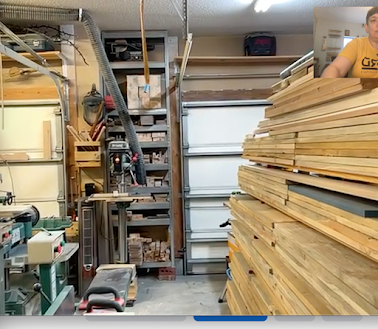
Bradley Lomax got his start in drumming as a child. Participating in school music programs and drum corps, majoring in music in college and growing a massive set of drumming chops, like many who read this blog. Along the way, he became aware of the impact that our lives have on the environment, and how the environment has responded to our impact; and at that point he became a champion of sustainability in all things. Because of that commitment he makes each Beetle Percussion product himself, using as many recycled or repurposed components as he possibly can, and his practice pads are some of the most beautiful in the world.

This makes him something of a rarity in the drum industry, and someone I’ve been dying to chat with for almost a year.

Here’s our interview.

BH: How did you go from playing to making drum equipment?

BL: I got really serious about drumming in high school, and after high school I marched a few seasons of drum corps (first with the Sky Ruders and then with Pioneer). My sophomore year in high school, I got a job working for Bill Cardwell at C&C Drum Shop, where I taught private lessons and in my spare time I watched and learned about the craft of drum making.

I got so into making stuff — learning at C&C and also taking jobs in construction — that eventually I left college and went into teaching lessons and doing construction pretty much full-time.

BH: What was your inspiration for starting Beetle Percussion?

BL: When I was growing up, my parents would take me on vacations in Colorado, and I loved it. Everything was so green and beautiful and I loved going back again and again. After I left school, my parents went back to our favorite vacation place and returned to tell me that beetles were destroying the trees there, eating them to death.

Global warming was forcing the Beetles to turn to these trees for a primary food source in increasingly huge numbers, and whole forests were being destroyed. The whole area was transitioning into some kind of arid desert because the trees were dying. I was horrified.

Since I work with wood, I decided to create something that would use the wood from these trees  and I hit upon the idea of practice pads. I called the US Forest Service to ask about getting some of that wood, because they had to clear it out of there before it became fuel for a forest fire; and they referred me to a bunch of mills who were taking the reclaimed timber and turning it into furniture and stuff.

I established a relationship with one of those mills, who brings me some of the reclaimed lumber; they deliver it on pallets right at my workshop.

At first, I tried making pads out of natural rounds, with the bark and everything, because I thought they’d look cool. But working with wood that way is really, really difficult and trying to force it into shape just wasn’t working. So ultimately, I had to set up a serious wood shop with all sorts of planing saws and things, learning how to treat the rough wood like potential furniture. After that, my vision for the pads became easier to clarify. Basically, I make practice pads like furniture, and that’s why they look so finished and smooth. There really isn’t any other way to make them turn out so good.


We source recycled car tire rubber from a company that supplies  it to flooring manufacturers. Because it used to be car tires, we sometimes have to pull out bits of metal — old nails, sidewall material, and stuff — so that we can work with just the rubber and mold it into a playing surface.

BH: What’s your target market? I assume it’s more connected to the marching arts, because your pads are fairly hard. I don’t currently own a Beetle pad but I’ve tried a few and that’s my takeaway.

BL: Yes, the overwhelming majority of people who buy our pads are marching band and corps members who want a pad that feels more like a marching drum head. I’d say almost 90 per cent of our customers fall into this category.

What’s great is that college instructor are excited by the “green” aspect of our pads, and they hype that to the kids and get them thinking about it, and suddenly it’s cool to play a “green” pad.

As to why the pads feel harder, a lot of that is the wood that’s used. Ash is a very dense, hard wood and that makes it great for building a marching pad around; pine, on the other hand, is a softer wood and will give you a response that’s a little closer to a concert or all-around pad.

BH: What about different thicknesses of rubber? Would that affect the response?

BL: It would, but only to a point. Thicker than a quarter-inch and it gets kind of dead-feeling. That’s why we stick with 3/16” and quarter-inch thicknesses on our pads — they just give the best response and feel.
And honestly, we have to respond to what our customers tell us they want. Since they’re mostly marching drummers, we have to give them a pad that responds the way a Kevlar-headed drum would.

BH: Fair enough.
In addition to your commitment to using reclaimed timber and recycled rubber, how else do you promote sustainability at Beetle?

BL: For every item sold, a tree seedling is planted to replace the tree that was destroyed by the beetles. We partner with forest management agencies in Colorado to accomplish this. Removing harmful material and planting new trees helps to stabilize the watershed, restores wildlife habitat and promotes regrowth.

BH: Now, for the hard questions: You make your pads as sustainability as possible. But the carbon footprint involved in that process, from gathering raw materials to shipping out finished pads, cannot be denied. How do you weigh this reality against your efforts? And how wide-angle can you go in your vision before it drives you crazy?

BL: (laughs) Yeah, it’s true. I plant trees, I use reclaimed and recycled materials, and I know it only goes so far. The truth is that none of us can control everything. We can only control what each of us can control, right where we are. It’s a double-edged sword and I do what I can. When my HOA lets me put solar panels on my roof, when everything can be delivered without relying on fossil fuels, that will be wonderful. In the meantime, just getting the kids to be more aware of the need for a more sustainable way of life is a win. We plant seeds and they carry them forward.

I can only do the best that I can do. And hope that enough people will notice and start to pay attention to the places in their own lives that can be made and done more sustainably.

BH: Well, you get no argument from me. I LOVE that there’s a company promoting sustainability and I look forward to more people taking notice and paying attention.